City of small distances
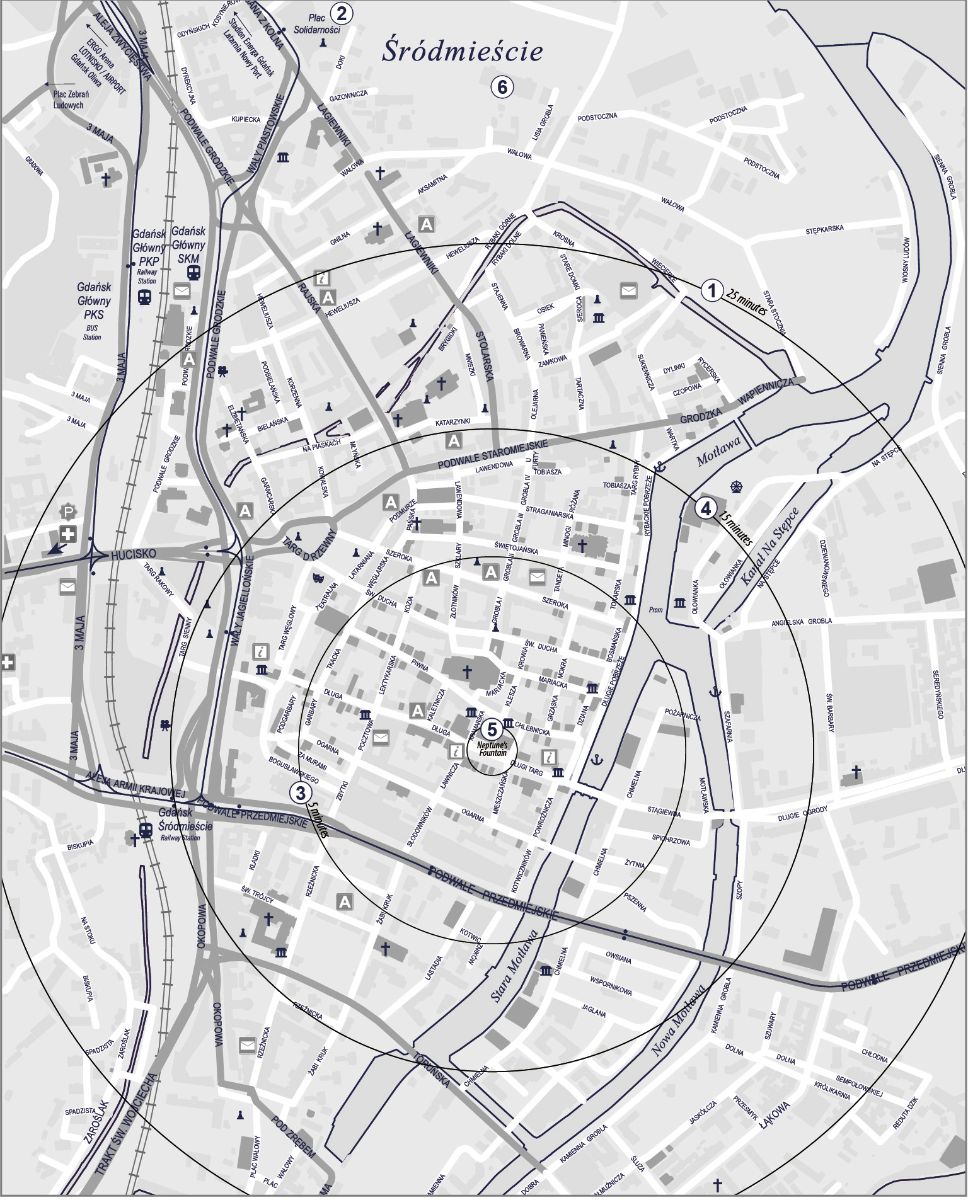
Most conference facilities, hotels, restaurants, and monuments in Gdansk are located no more than 30-minute walk from each other. This is a big advantage, especially after an exhausting day at the conference - you don't have to use local public transport, because you can cover short distances on foot. This not only benefits your health but also the environment because you produce a smaller carbon footprint.
Gdansk, as a city of short distances, can be discovered on foot. This comes with many benefits:
Gdansk is a charming city that is worth exploring slowly, enjoying the atmosphere and architectural details. While walking, you can stop at any time to take a closer look at the monuments, look into charming amber shops, or taste local specialties in the restaurants you pass along the way.
- Proximity to infrastructure
Most major conference facilities and hotels are located near each other, especially within the Main Town. This allows you to quickly reach them on foot, without having to wait for buses or look for parking spaces.
Walking is the most ecological way of getting around - by reducing CO2 emissions, we contribute to environmental protection. Moreover, walking is a great form of physical activity that has a positive impact on health and well-being.
- Discovering hidden corners
When walking to a conference or meeting, it is easier to discover hidden corners of the city that might be missed when traveling by car or public transport. Charming alleys, small courtyards, and lesser-known monuments are often located off the main tourist routes and are accessible only to pedestrians.
- Direct contact with culture and inhabitants
Walking around Gdansk, you have the opportunity to have direct contact with its inhabitants and participate in local life. It's easier to start conversations with locals, learn interesting facts about the city, and feel its authentic atmosphere.
When you can't take one more step, you can always jump on your bike. Gdańsk has the
MEVO urban bicycle system.
Amenities for People with Disabilities on the Streets of Gdansk
We strive to eliminate various types of barriers that make it difficult to move around Gdansk or use the city's infrastructure. We aim to ensure that the solutions we implement are friendly to people with mobility and visual impairments, as well as seniors. Improvements for pedestrians with disabilities:
- lowering curbs - facilitates movement on sidewalks
- warning tiles - special tiles with bumps on the edges of sidewalks and tram and bus stopsspecial Kassel curbs - rounded edges that allow bus drivers to get closer to the edge of the stop, making it easier for people in wheelchairs or seniors to board the busstops on roads - islands that facilitate safe crossing of the street in stages
- traffic lights with sound signals - inform visually impaired people when it is safe to cross the street
- acoustic signals at crossings - warn visually impaired people of approaching tramsaccessible elevators (e.g., marked in Braille) - allow people with mobility or visual impairments and seniors to use pedestrian bridges and underpasses
- special platforms - enable people in wheelchairs and seniors to access selected tram and bus stopsminiature models of monuments - scaled-down models of St. Mary's Basilica, the Crane, and the Great Synagogue with information in Braille for people with visual impairments
- accessible toilets - specially adapted for people with disabilities
Replacing cobblestones - for example, on Dluga Street, with flat and accessible surfaces, proving that cultural heritage can be preserved while facilitating movement for people with mobility impairments.